> For the complete documentation index, see [llms.txt](https://guide.for.sg/llms.txt). Markdown versions of documentation pages are available by appending `.md` to page URLs; this page is available as [Markdown](https://guide.for.sg/guide/directory.md).
# Directory
Wanted to use a link but realised that it has been taken or wondering who owns a particular shortlink within your institution?
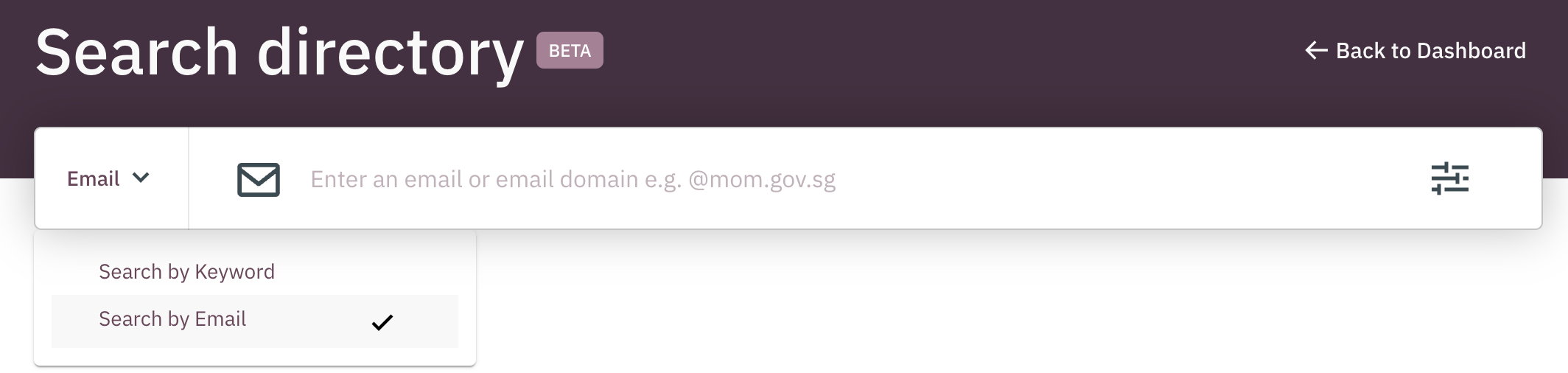
Directory allows you to search for the link owners through keyword search or you can also search the links owned by a particular user through their email or email domains if you want to find out how many links your institution owns.
## Search by keywords or email
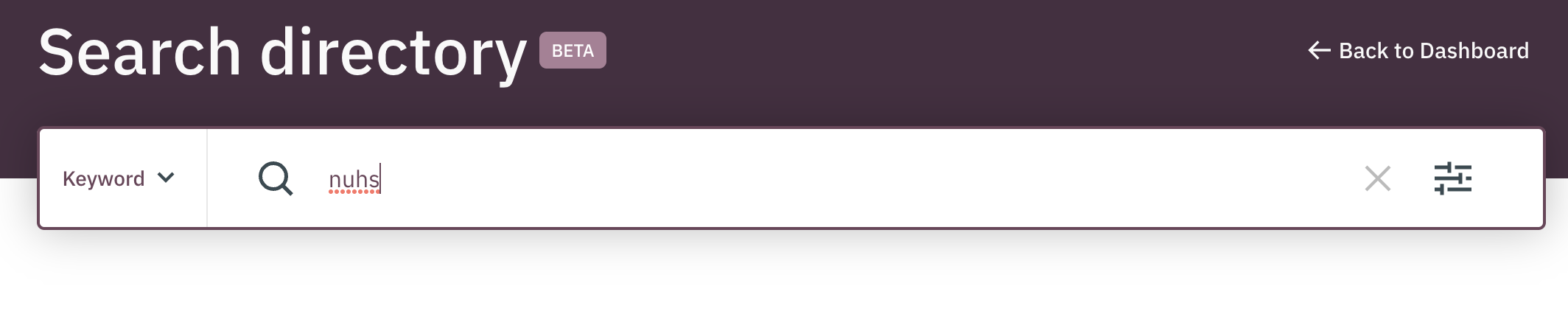
### 1. Keywords
Keyword search is typically useful when you want to search for the owner of a particular link.
This can be anything from the full complete shortlink (for.sg/your-link) to only the shortlink (your-link).
### 2. Email
This is useful when you want to know how many links are owned by a particular healthcare professional or even within your institution.
You can either key in the email address of the officer () or the email domain (for example @ihis.sg) if you want to see how many links are owned by your institution.
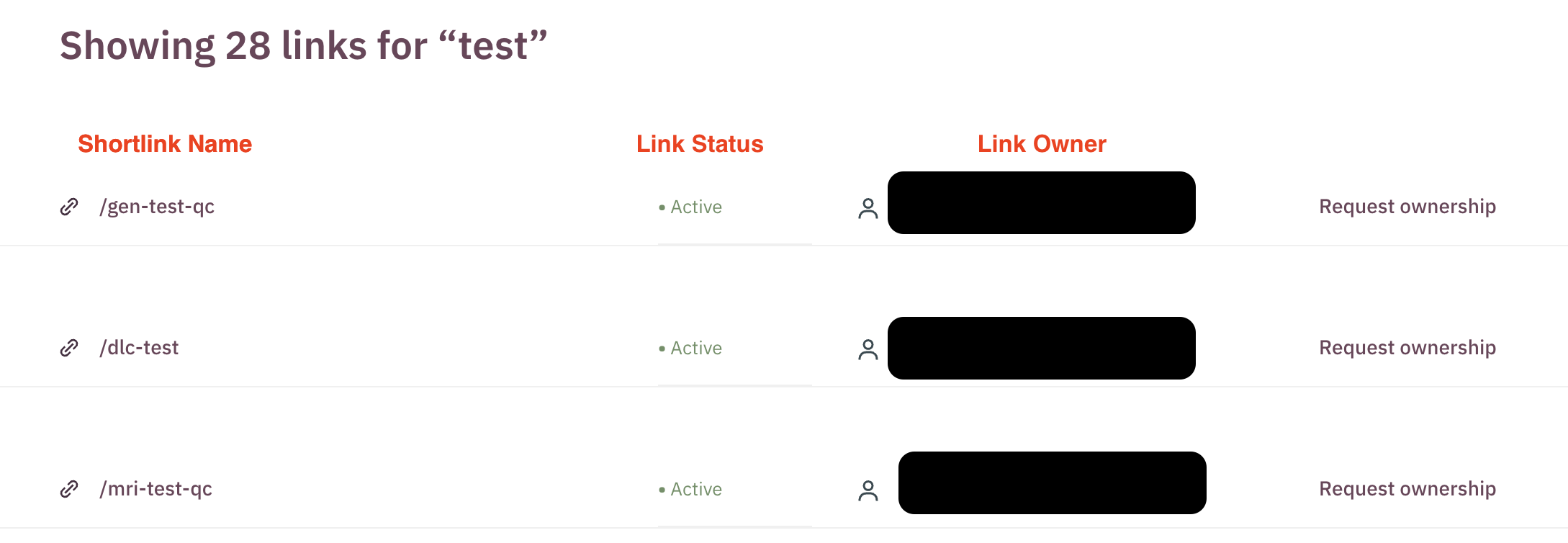
## Search results
The search result will contain details about the shortlink and who owns it.
## How do I request for link ownership from another user?
We would recommend you to first email the officer who is the original link owner to assist you with the transfer of link ownership to you.
In the event that he/she has left the organisation or is uncontactable, you can submit a request for a transfer of link ownership by clicking on the "Request ownership" button like below.
Please provide us with the necessary details to assist you through the form and our team will help with your request as soon as possible.